
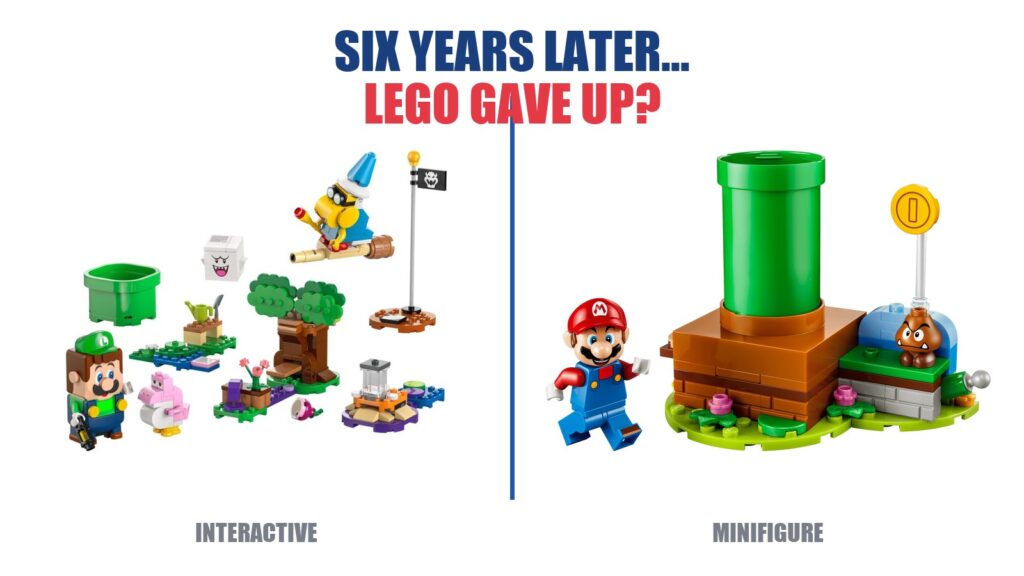
🍄 The Backlog
LEGO Super Mario is finally becoming something fans have asked for since the theme launched: normal LEGO. Traditional minifigures. Buildable locations. Sets that look and play like the rest of the aisle.
Eight of them land January 1, 2027, and honestly, I am excited about it.
But there is something pretty funny about the timing.
LEGO is walking away from the electronic Mario, Luigi and Peach figures that defined this theme for six years, at almost exactly the same moment it is making another huge bet on technology-enhanced bricks.
How many times is LEGO going to try to make our bricks smarter before deciding maybe the bricks were never the problem?
Heads up: the LEGO links on this page are affiliate links. Buying through one helps keep the lights on here at no extra cost to you. See our affiliate disclosure.
Mario Was Weird From Day One
When LEGO Super Mario showed up in 2020, LEGO did not take the obvious route. There was no Mario minifigure. Instead we got a chunky electronic Mario with a screen in his chest, sensors underneath him, sounds, reactions, and a whole play system built around walking him through physical courses.
Give LEGO credit. It was genuinely different.
StudSon was a lot younger when we started with these, and the interactive part absolutely worked on him. Mario reacting to enemies and coins and different surfaces made the finished build something you could actually play with instead of something you put on a shelf.
But it also made for a strange LEGO theme. The sets were often less about building a good model and more about assembling a physical level for an electronic character to cross. That is fine while the gimmick is exciting.
What happens when the gimmick gets old?
Apparently we are about to find out.
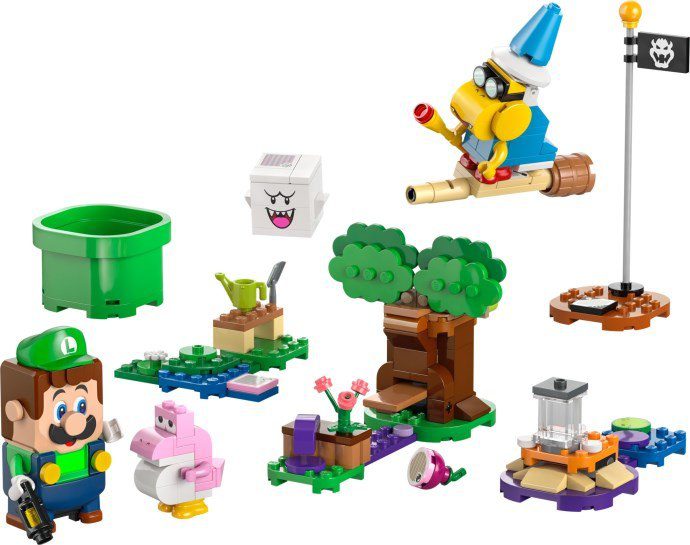
Interactive Luigi (71440). We own this one. It made LEGO Super Mario unlike anything else in the aisle, which was its greatest strength and, eventually, part of the problem. Image: Brickset.
2027 Is the Mario Theme A Lot of Us Wanted All Along
The new wave goes the other way entirely: actual Mario characters, at minifigure scale, in a form that sits naturally next to the rest of a collection. Ten characters get a minifigure for the first time, including Yoshi, Princess Peach, Toad, Bowser Jr. and Koopa Troopa.
For collectors this is a big deal, and the reason is simple. A normal minifigure can go in a display. It can stand next to another character. A kid can drop Mario into whatever ridiculous crossover they are building that afternoon.
That interoperability is LEGO’s single greatest feature, and Mario never had it. The electronic figure was the centre of its own closed ecosystem. Minifigure scale knocks that wall down.
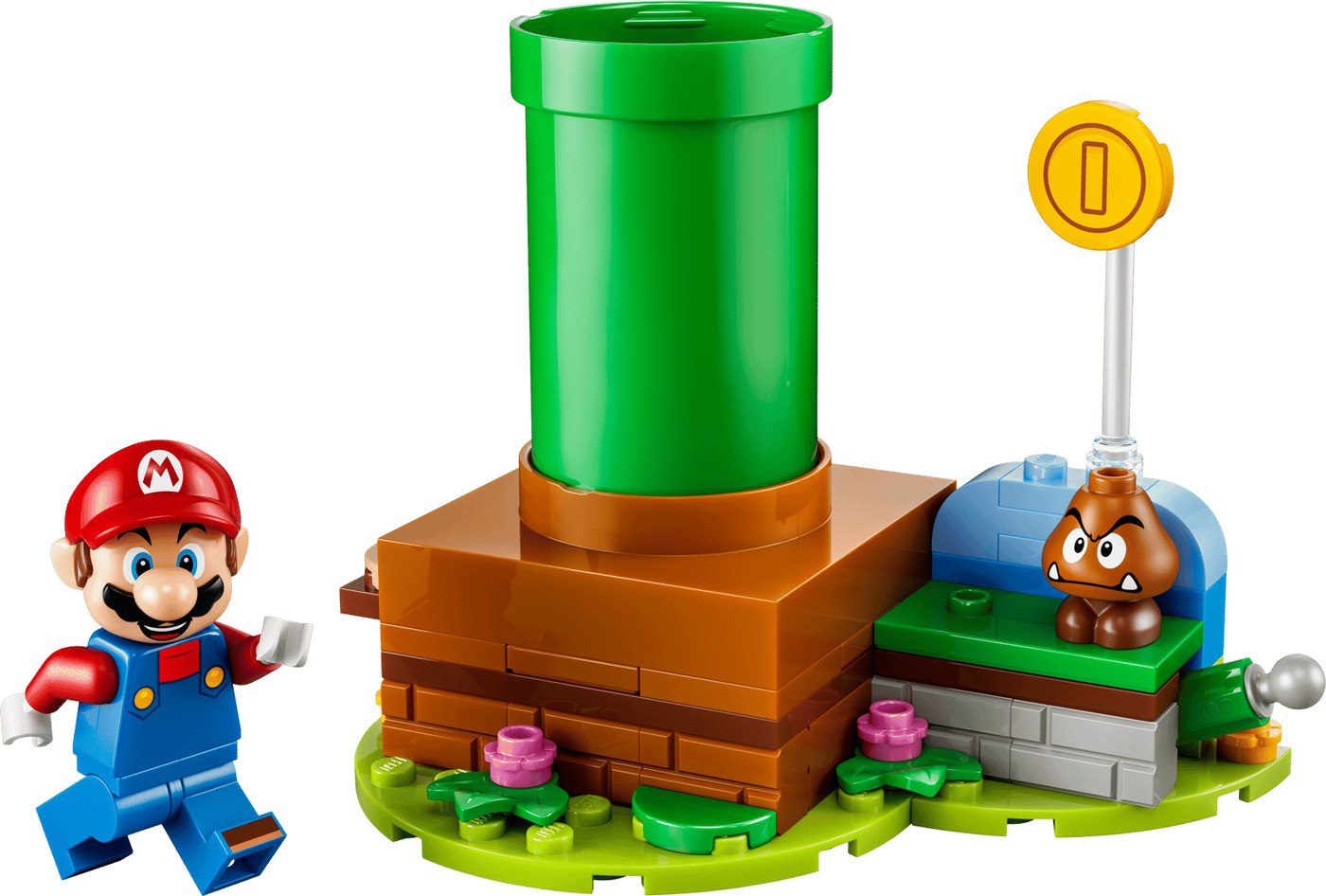
72052 Mario’s Pipe Jump, $9.99. A regular Mario minifigure, a pipe and a Goomba. Six years late and very welcome. Image: LEGO.
Full lineup, prices and piece counts are further down. First, the part I cannot get past.
But Here Is the Part I Cannot Get Past
LEGO is simplifying Mario at the exact moment it is trying, again, to make LEGO more technologically interactive.
That is what makes this more interesting than a set announcement. And we have been here before.
The receipts, from our own retirement data
This is not a vibe. We track retirement dates, so we went and looked, and the timing is not subtle:
| Interactive set | Retires |
|---|---|
| 71439 Adventures with Interactive LEGO Mario | July 31, 2026 (already gone) |
| 71440 Adventures with Interactive LEGO Luigi | December 31, 2026 |
| 71441 Adventures with Interactive LEGO Peach | December 31, 2026 |
| 72043 Mario Kart, Interactive LEGO Mario & Standard Kart | December 31, 2026 |
The last interactive Super Mario set leaves shelves December 31, 2026. The first minifigure set arrives January 1, 2027.
One day. LEGO did not lose interest and then have an idea. This was scheduled.
Interactive Mario is not LEGO’s first attempt at this. Hidden Side already showed us how this movie ends.
LEGO Hidden Side Already Ran This Experiment
Hidden Side paired physical sets with an augmented reality app. You built the model, pointed a tablet at it, and the thing on your table became part of a game.
I am going to defend it. Hidden Side was cool. The sets had real personality, spooky without being seasonal tat, and a lot of them transformed between a normal and a haunted version. The theme had an identity nothing else in the catalogue had. And the app was not bolted on afterwards, it was clearly meant to be a reason you bought the set.
It launched in August 2019. The product line was finished by the end of 2020, about eighteen months. The app limped on until LEGO switched it off, servers and all, at the start of 2023.
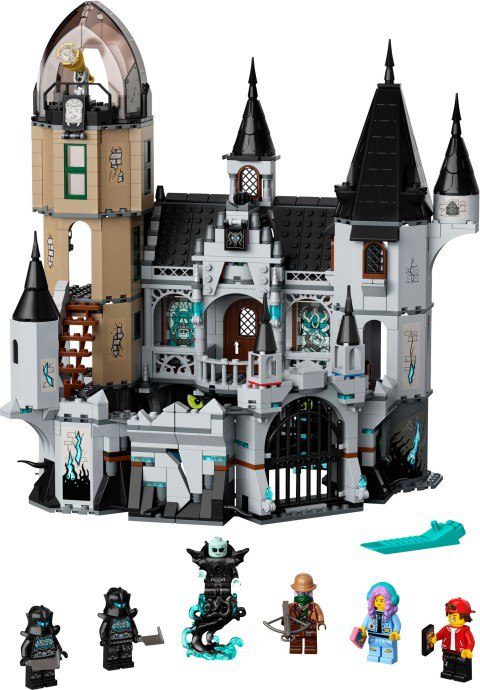
70437 Mystery Mansion, the only Hidden Side set we never got. Its app has been dead since 2023. Image: Brickset.
We own every Hidden Side set except 70437, the Mystery Mansion. Every October they come out of storage and go up around the house, and at this point rebuilding and repairing whatever got crushed in the bin is part of the tradition. StudSon still loves it.
Here is the funny part. Years after the app stopped mattering, the bricks are still fun.
That might be the whole lesson.
Kids and Adult Collectors Are Not Buying the Same Thing
This is where having both of us in the house is useful.
I look at an electronic LEGO gimmick and immediately start asking annoying adult questions. What happens when the app goes? What happens when the batteries die? Is this still interesting in five years? Does the tech make the LEGO better, or is it tech because somebody decided LEGO needed tech?
StudSon does not care about any of that. He liked interactive Mario. He liked Hidden Side. If the technology makes the bricks do something fun right now, that is enough, and it is a completely reasonable position when you are nine.
Which is why I do not think LEGO is crazy for keeping at this. There is a real audience for it. But there is one problem LEGO has to solve, and it has not solved it twice now:
The technology has to make the bricks better without becoming the reason the bricks exist.
Hidden Side survived in our house because the sets were still good once the novelty burned off. Some of the interactive Mario sets have a harder time clearing that bar, because so much of what you were buying was a course for the electronic figure to walk through.
And Now We Have SMART Play
Here is what makes the timing so strange. LEGO has obviously not abandoned the idea of mixing technology with bricks. It is doing the opposite, and spending real money on it.
We are not neutral here either. StudDad bought into the range early and wrote about the hype, the hate and why he bought one anyway. StudSon built and scored a 9 out of 10 for the Darth Vader TIE Fighter Smart Brick set. We also worked through whether the Pokemon SMART Play sets are worth it for a kid.
So this is not a grudge. It is a pattern:
Which leaves the question that actually matters, and LEGO has now had two goes at answering it. What did LEGO learn from Hidden Side? What did it learn from interactive Mario? Because if the answer is better hardware and a nicer app, that is not a lesson, that is a rerun.
The Real Test for Smart LEGO
The test is not whether SMART Play is impressive. I am sure it is. The test is much simpler than that:
When the smart part stops being interesting, is the LEGO underneath it still worth owning?
That is the standard, and it is not a cynical one. Hidden Side passes it. The app has been dead three years and those sets still come out every Halloween, because the haunted houses were good buildings on their own merits.
If SMART Play passes it, LEGO may finally have cracked this. If it does not, then ten years from now we will be pulling SMART Play bricks out of a bin next to interactive Mario and Hidden Side, wondering why LEGO keeps solving a problem nobody asked it to solve.
StudDad’s Take
Moving Super Mario to minifigure scale is the right call. LEGO should have offered normal Mario minifigures alongside the interactive system years ago instead of making it an either-or.
And I am glad they tried the weird thing first. The electronic Mario was a genuinely creative swing and StudSon got real joy out of it. I would rather LEGO take that swing and miss than hand us another safe licensed theme.
But LEGO’s best feature has always been stupidly simple. The bricks work with the other bricks. No account. No app. No supported hardware. You build a thing, you tear it apart, you build another thing.
Technology can add to that. It should never become the price of entry for enjoying what you already paid for.
Buy LEGO for the LEGO. If an app comes with it, treat that as a bonus with an expiry date you cannot see.
So yes, I am excited about the next Mario. And yes, I am a little sad. Another interactive LEGO experiment is going in the bin, and I own a few of them, and the tech was fun. I am watching the newest smart-brick bet with equal parts curiosity and suspicion.
Should You Grab One of the Outgoing Interactive Sets?
I would not panic-buy the interactive ecosystem just because LEGO is changing direction. Buy one of the retiring sets if:
Otherwise, wait and see what the minifigure era gives us. And do not buy a dying starter course as a bet. Hidden Side did not turn into gold and neither will this. The test is whether your kid plays with it in the next four months, nothing more.
The StudSource Play
Do Not Pay Full Price for the Outgoing Interactive Sets
Mario’s interactive era is ending, but that does not mean you should suddenly pay full price just because something is retiring.
If you already own the system, your kid loves it, or there is a particular Mario, Luigi or Peach set you still want, absolutely keep an eye on it. Just check the price first.
These are fun LEGO sets, not investments.
What I am actually buying in January
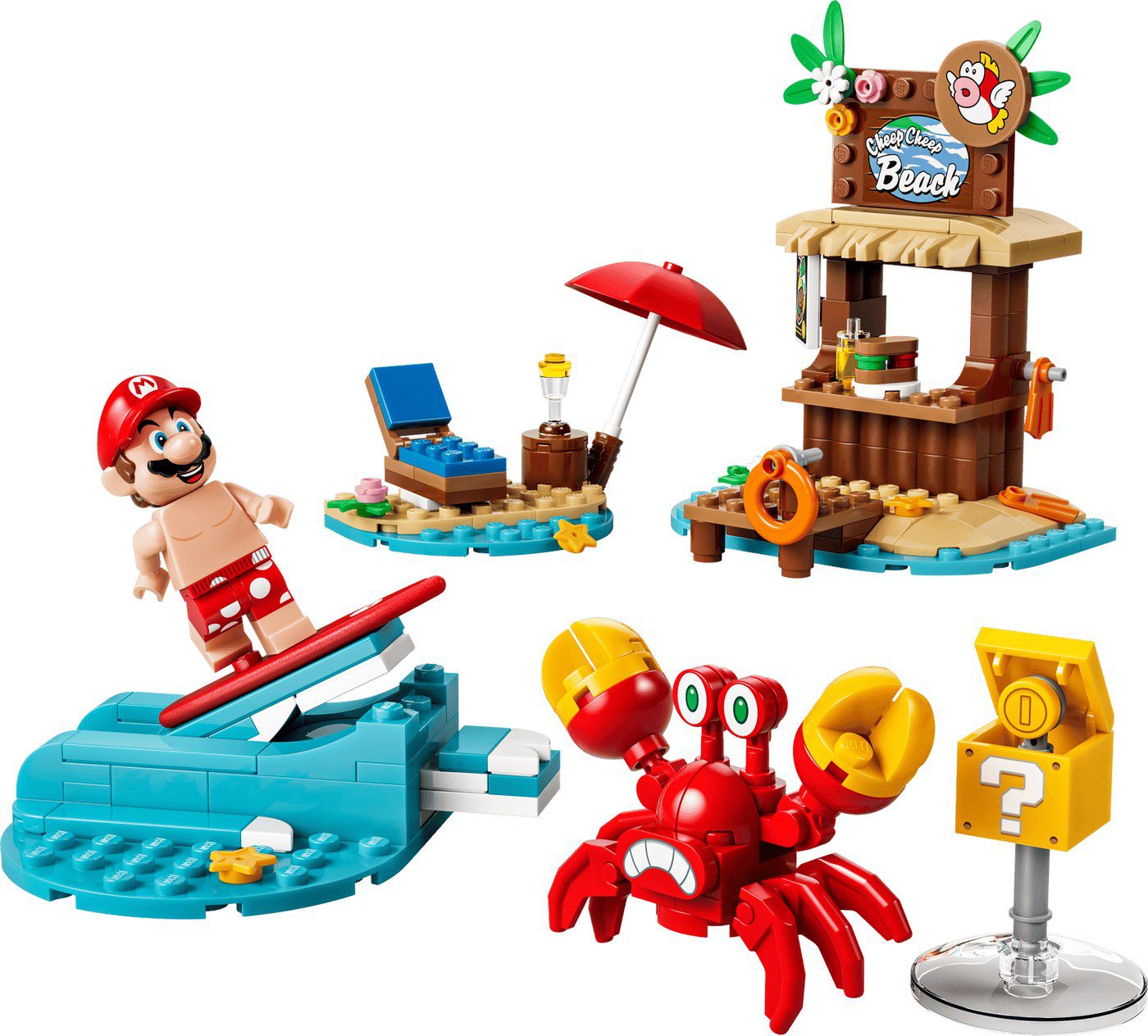
72055 Mario’s Beach Adventures. Mario. In swim trunks. On a surfboard. Image: LEGO.
72055 Mario’s Beach Adventures ($19.99). Mario in swim trunks on a surfboard with a crab. I need no further justification, and it also happens to be the best value in the wave.
72052 Mario’s Pipe Jump ($9.99). Standard Mario, a warp pipe and a Goomba for ten bucks. The cheapest possible way to find out if the new direction works.
72060 Fire Mario & Bowser’s Castle ($99.99). The 850-piece flagship, and the one with Princess Peach.
All three when they go on sale, obviously. Super Mario discounts reliably. There is no reason to pay launch price on January 1 for a theme that will be 20 percent off by spring.
Quick Reference: Every 2027 Super Mario Set
If you just want the confirmed lineup, here it is. Then we can get back to the part I actually find interesting.
Prices and piece counts come from LEGO’s own product pages rather than the leak, and a couple differ. Numbers and names link through.
| Set | Name | Age | Pieces | Price | ¢/pc |
|---|---|---|---|---|---|
| 72052 | Mario’s Pipe Jump | 6+ | 61 | $9.99 | 16.4 |
| 72054 | Mario Kart: Racing with Mario | 6+ | 84 | $14.99 | 17.8 |
| 72055 | Mario’s Beach Adventures | 6+ | 196 | $19.99 | 10.2 |
| 72056 | Mario Kart: Luigi & Bowser Jr.’s Race | 4+ | 104 | $29.99 | 28.8 |
| 72057 | Yoshi at Mario’s House | 4+ | 147 | $39.99 | 27.2 |
| 72058 | Mario Kart: Bowser’s Rumbling Race | 7+ | 409 | $59.99 | 14.7 |
| 72061 | Fire Luigi vs. Koopa Troopa Battle | 7+ | 241 | $29.99 | 12.4 |
| 72060 | Fire Mario & Bowser’s Castle | 8+ | 850 | $99.99 | 11.8 |
Before anybody shouts about 72056 and 72057: those are the only two 4+ sets in the wave. LEGO’s 4+ range uses big simplified elements and pre-built chassis parts for small hands, so it always looks terrible per-piece and always has. Everything 6+ and up lands between 10 and 18 cents, which is normal for a licensed theme.
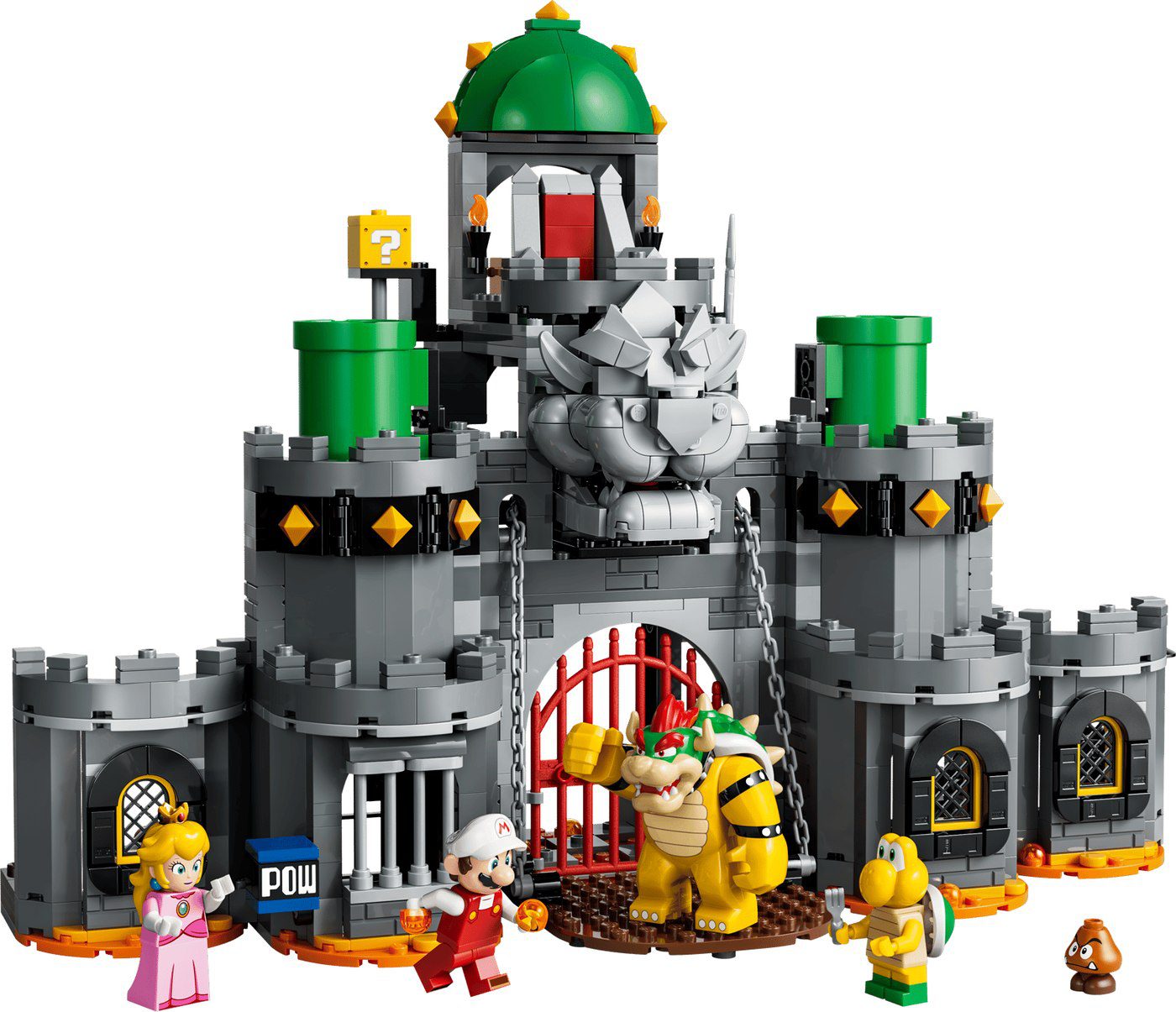
72060 Fire Mario & Bowser’s Castle, the 850-piece flagship. Image: LEGO.
What Do You Think?
Would you rather have traditional LEGO Mario minifigures, or did you actually prefer the interactive Mario system?
And if you owned Hidden Side, I really want to know: did you ever genuinely use the app side of it, or did you end up like us, keeping the sets because the LEGO itself was good?
LEGO Super Mario Minifigures FAQ
When do the new LEGO Super Mario minifigure sets release?
All eight sets release on January 1, 2027. They are listed as coming soon on LEGO.com now, so you can set a reminder, but they are not orderable yet.
How many new LEGO Super Mario sets are there?
Eight, from $9.99 for 72052 Mario’s Pipe Jump up to $99.99 for 72060 Fire Mario & Bowser’s Castle. Every one includes at least one minifigure.
Which characters get LEGO minifigures for the first time?
Ten: Yoshi, Princess Peach, Toad, Bowser Jr., Koopa Troopa, Fire Mario, Fire Luigi, Surfing Mario, a Cow, and Bowser as a bigfig. Until now Mario, Luigi and Peach only existed as large interactive electronic figures.
Is LEGO discontinuing interactive Super Mario?
Yes. 71439 Adventures with Interactive LEGO Mario retired on July 31, 2026. The Luigi and Peach starter courses and the interactive Mario Kart set all retire on December 31, 2026, one day before the minifigure line launches.
Will the LEGO Super Mario app stop working?
LEGO has not announced a shutdown date. Worth knowing that LEGO switched off the Hidden Side app in 2023, roughly two years after that theme ended. Treat continued app support on a retired line as uncertain rather than guaranteed.
How much is LEGO 72060 Fire Mario & Bowser’s Castle?
LEGO 72060 Fire Mario & Bowser’s Castle costs $99.99 in the US. It is the flagship of the January 2027 Super Mario wave at 850 pieces, rated 8+, and it includes Fire Mario, Fire Luigi and Princess Peach minifigures. That works out to roughly 11.8 cents per piece. It releases on January 1, 2027.
How many pieces is LEGO 72055 Mario’s Beach Adventures?
LEGO 72055 Mario’s Beach Adventures has 196 pieces and costs $19.99, which is about 10.2 cents per piece and the best value in the whole January 2027 wave. It is rated 6+ and includes Surfing Mario in swim trunks plus a Toad minifigure, a surfboard, a crab and a beach hut.
What comes in LEGO 72052 Mario’s Pipe Jump?
LEGO 72052 Mario’s Pipe Jump is a 61-piece set for $9.99 containing a standard Mario minifigure, a green warp pipe and a Goomba. It is the cheapest way into the new minifigure-based Super Mario range, rated 6+, and it releases on January 1, 2027.
Why do 72056 and 72057 cost so much per piece?
Because they are 4+ sets. LEGO’s 4+ range uses larger simplified elements and pre-assembled chassis parts designed for small hands, so the piece count is always low relative to price. It is not a markup specific to these sets, it is how the entire 4+ range is built.
Which new LEGO Super Mario set is the best value?
72055 Mario’s Beach Adventures, at 196 pieces for $19.99, works out to about 10.2 cents per piece. That is the best in the wave and comfortably better than the licensed-theme average.
StudDad
StudSource.Shop